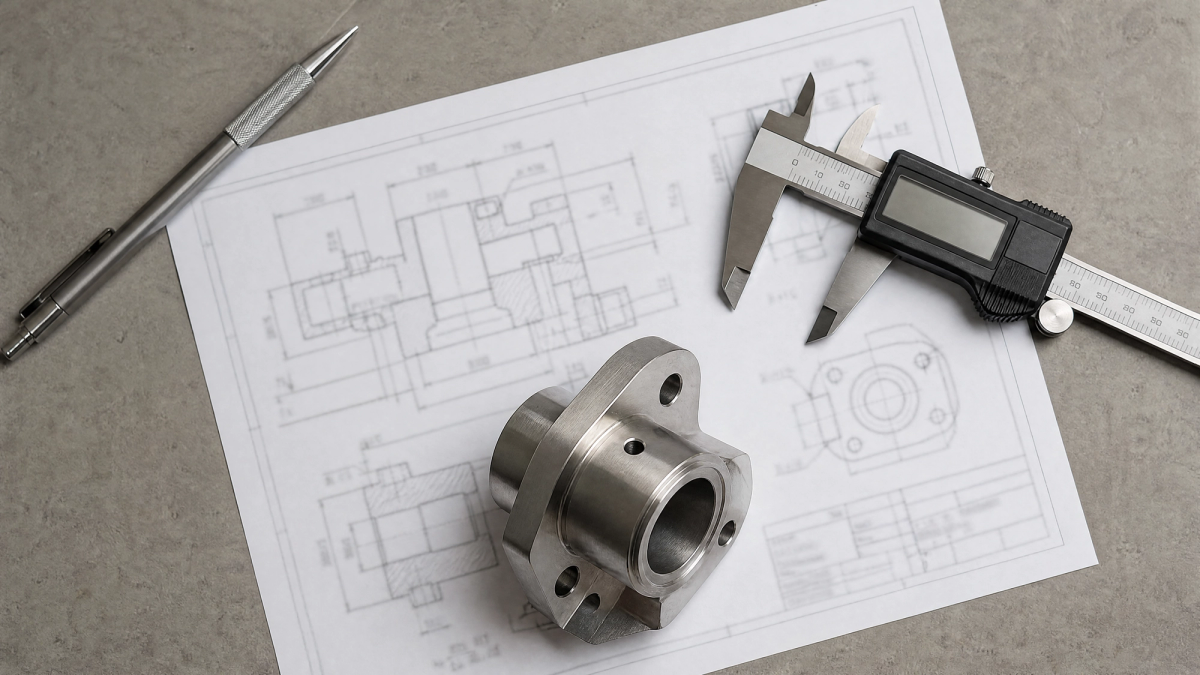
The single biggest cause of quote delays and revisions in CNC machining isn't complexity — it's incomplete information. Here's what to send the first time, so you're not going back and forth before you even get a price.
The essentials
- Drawing or CAD file. PDF works for simple geometry; STEP, IGES, or DWG/DXF are better for anything with tight tolerances or complex features, since native formats eliminate measurement ambiguity.
- Material. Specific grade, not a general category.
- Quantity. Including whether this is a one-off, prototype-to-production path, or an ongoing repeat order.
- Tolerances. Either called out on the drawing directly or stated as a general tolerance standard if the part doesn't require feature-specific precision.
What separates a good quote from a guess
- Surface finish requirements, if any (Ra values, plating, coating).
- Inspection requirements — do you need a dimensional report, material certificate, or first-article approval before the full batch ships?
- Delivery timeline. "As soon as possible" isn't a timeline a vendor can plan production around — give an actual date or window if you have one.
Optional but helpful
- Reference to similar parts you've ordered before, if applicable — this helps a new vendor calibrate quickly to what "acceptable" looks like for your standards.
- Any known critical features — if one dimension on the part matters more than the rest functionally, flag it. Vendors often allocate more inspection attention to features called out as critical.
Why this checklist saves time on both sides
A complete RFQ means a vendor can give a real quote, not a placeholder estimate that changes once they actually study the drawing. It also means fewer rounds of back-and-forth clarification — which matters most when you're trying to compare multiple vendor quotes on a deadline.
Related Service
upload drawing for quote →